
Start to finish
How installation actually works
A standby generator is not an appliance you plug in. It is a permitted electrical and gas installation that ties into two utilities, and it has to be inspected. Here is every step, in order, including the parts that determine what it costs.
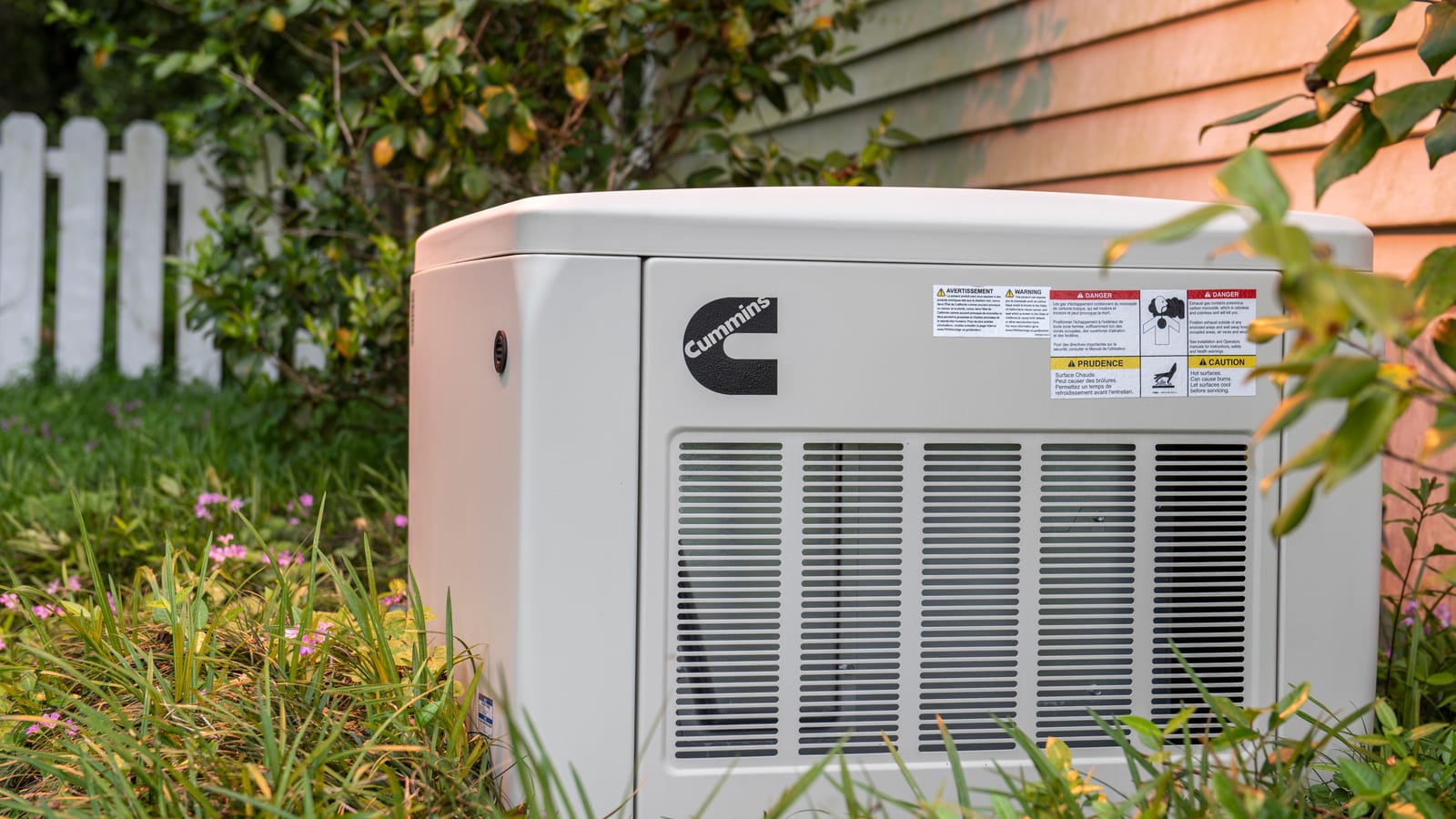
Step 1 — The site survey
A licensed electrician comes to the property for about 45 minutes. This is free and there is no obligation attached to it. Four things get measured, and those four things are essentially your installation price.
- Pad location. Where the unit can legally sit, given setback requirements from windows, doors, vents and the property line, plus any HOA constraints.
- Gas supply. Whether your meter has spare capacity for the additional demand, and what size line the run requires. This is the biggest single variable in the whole job.
- Electrical path. The distance and route from the generator to your panel, whether the panel has capacity, and whether a service-entrance rated transfer switch simplifies the tie-in.
- Jurisdiction. Which city, what permits are required, and what the current inspection lead time looks like.
Step 2 — The written quote
You get a fixed installation price in writing, with the equipment line itemized separately so you can see exactly which part is the published Cummins price and which part is our labor and materials. If something at your property is going to be unusually expensive, we tell you before you commit, not after the trench is open.
No deposit is required to receive a quote. A refundable deposit is only relevant if you want to reserve a specific unit and lock the equipment price while permitting runs.
Step 3 — Permits
We pull the electrical permit. A gas permit, where the city requires one, is issued to the licensed plumber who runs the gas line. On a turnkey job we coordinate both, and the permit fees are inside your quote.
Permitting is usually what sets the calendar, not our crew availability. Lead times vary across Metroplex jurisdictions and we will give you a realistic window rather than an optimistic one.
Step 4 — Installation
The physical work on a typical residential job runs one to three days. The pad is set, the unit is placed and leveled, the transfer switch is mounted, and the electrical is tied into your panel. The gas line is run and pressure tested by a licensed plumber, either one we hire or one you choose.
The electrical work is done by our own crews, never subcontractors. They trade as Clements Electric, the assumed name under which UTS ElectricPros, LLC runs its licensed electrical contracting business from Grand Prairie. Same company and same license, TECL #40628, as the dealership that sold you the generator.
On liquid-cooled units above 25kW, placement sometimes requires equipment access that a standard truck cannot provide. That gets identified at the survey, never discovered on install day.
Step 5 — Inspection
The city inspects. We meet the inspector on site. If anything is flagged, we correct it and re-inspect at our cost, because it is our work.
Step 6 — Commissioning and handover
We start the unit and test it under actual load, not just at idle. We set the weekly exercise schedule, confirm the transfer timing, and walk you through the controller, the maintenance interval and what the various fault indications mean.
You should finish that walkthrough able to operate the machine without calling anyone. If you cannot, we have not finished.
What we will not do: quote an installation price over the phone from a description of your house. Every dealer who does that is either padding to cover the unknown or is going to revise it later. Neither one is good for you.
Questions
How long does the whole process take from deposit to running generator?
The physical installation is one to three days. End to end, the calendar is normally driven by equipment availability and by permitting and inspection scheduling in your city. We give you a realistic window at the survey once we know the jurisdiction and the scope, rather than quoting a number that sounds good and slips.
Can I hire my own plumber for the gas line?
Yes. The gas line is run by a licensed plumber either way, or by your propane company on an LP system. On a turnkey job we hire and schedule the plumber, the gas line is its own line item in the quote, and we stand behind it. If you would rather hire your own plumber or propane company to save money, we take the gas line out of our quote and give them the generator's fuel demand, required inlet pressure and pad location so they can size it. Your plumber then warrants the gas work and we warrant ours.
Do I have to be home for the installation?
For the survey, yes, or someone who can grant access and answer questions about the property. For the installation itself we need access to the panel, the gas meter and the yard. Most customers are present on the first day and for the commissioning walkthrough at the end.
Will you replace my electrical panel if it is too old?
We can, and sometimes it is genuinely required before a generator can be tied in safely. If that is the case we tell you at the survey and it appears as its own line item, so you can decide on it separately rather than finding it buried in a lump sum.
What maintenance does it need afterward?
A standby generator needs periodic oil and filter service and an annual inspection, on an interval based on run hours and elapsed time. We offer maintenance plans and we will tell you the interval at handover. Skipping it is the fastest way to have a generator that does not start during the outage you bought it for.
Get a real number for your property
Equipment pricing is published on every model. The installation number takes about 45 minutes at your address, and it costs nothing.
Related across UTS
- Our crews install and service generators under the Clements Electric name.Clements Electric generator installation, repair and maintenance.