
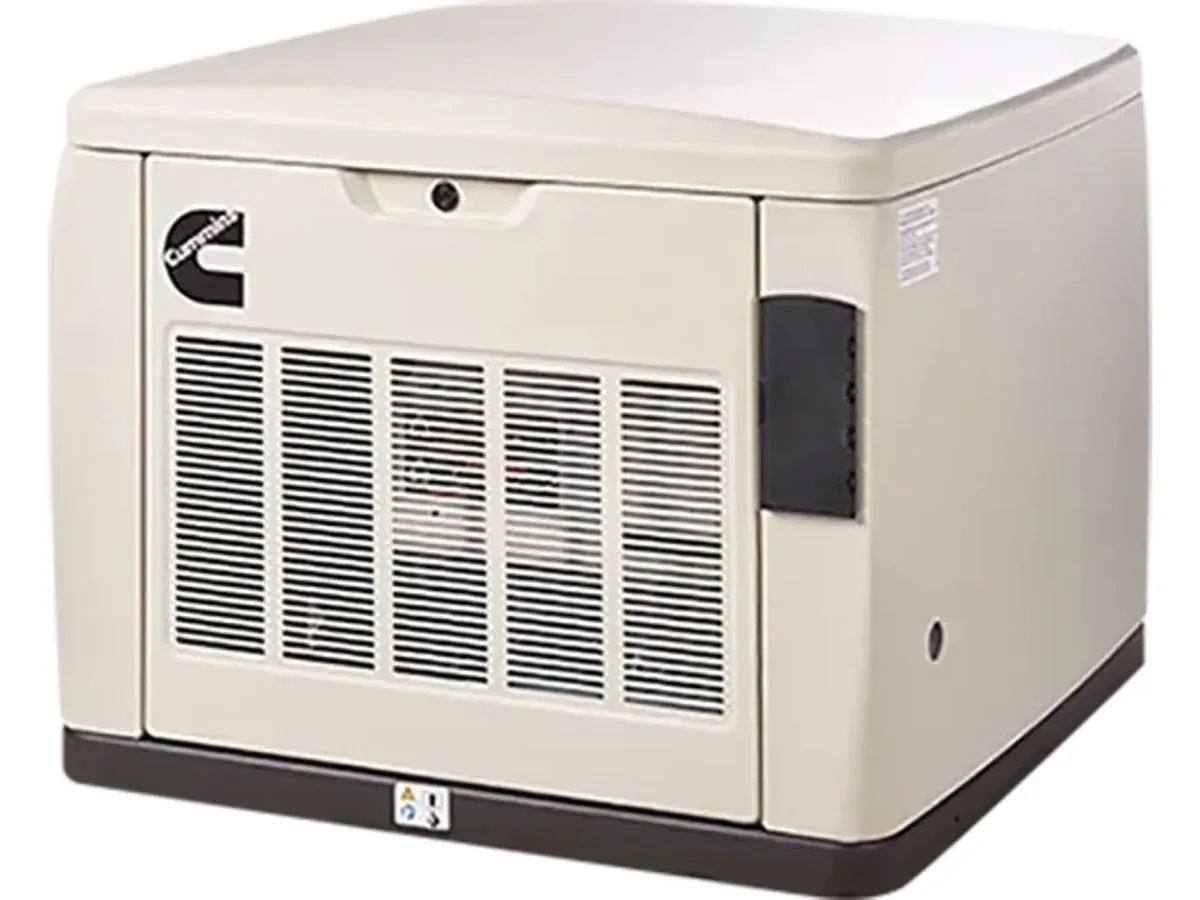
Cummins RS17A
Air-cooled · Natural Gas / LP Vapor
Denton County · Texas
Cummins home standby generators sold at published equipment pricing and installed in Denton by our own licensed electricians. We pull the permits, meet the inspector, and commission the unit under load before we leave.
| County | Denton County |
|---|---|
| Electric delivery | Denton Municipal Electric, a community-owned utility, for most of the city, with CoServ Electric and Oncor at some addresses |
| Natural gas | Atmos Energy |
| Installed by | Clements Electric, Grand Prairie |
| Permit required | Yes — we pull it |
| Typical 20kW installed | $13,500 – $17,000 |
| Site survey | Free, no obligation |
Texas homes lose power for reasons that have nothing to do with how new the neighborhood is. Spring and early summer bring severe thunderstorms and straight-line winds that take down distribution lines. Winter brings ice loading, which is what put much of the state in the dark in February 2021 and again during Winter Storm Fern in January 2026. And summer brings peak demand on a grid that has repeatedly asked Texans to conserve.
What makes an outage genuinely serious here is air conditioning. A summer outage in Denton is not an inconvenience, it is a habitability problem within hours, and it is the reason sizing a generator in Texas starts with your AC tonnage rather than your square footage.
That list is where the work actually is, not an exhaustive boundary — we install anywhere in Denton and across Denton County. It is worth naming because lot layout matters more than most homeowners expect, though not for the reason people assume. What fixes the generator’s position is the manufacturer’s listed clearance from windows, doors and combustibles, plus the fuel gas and electrical codes. That distance then drives the gas run and the electrical run, which are the two biggest variables in your installation price.
Two things vary by subdivision rather than by city. Newer developments tend to have the gas meter and the panel on the same elevation, which shortens both runs; older ones frequently do not. And an HOA with an architectural committee adds a submission step — not a veto, because Texas Property Code § 202.019 bars an association from prohibiting a standby generator, but a step worth starting early.
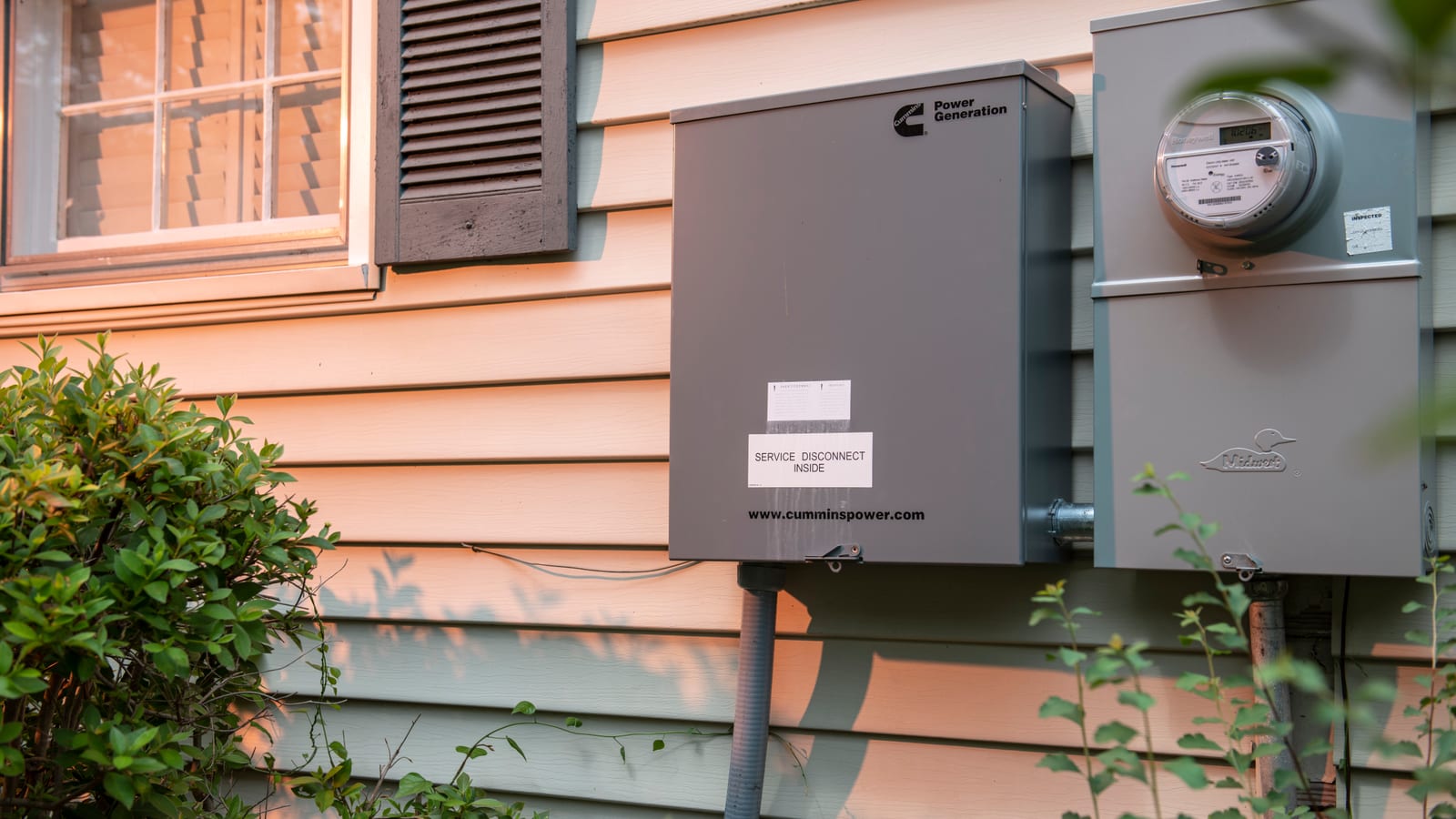
Permits in Denton go through Development Services, 401 N. Elm St. The published permit fee is $200 minimum.
New and replacement generators both need a permit. Three inspections: plumbing rough where applicable, electrical rough, electrical final.
Denton is the exception to state preemption, because Denton Municipal Electric is community-owned. If you are a DME customer the city keeps its authority over your install — which is why its requirements are the most worth reading in the Metroplex.
Either way we pull the permits, schedule the inspection and meet the inspector on site. It is inside the installation quote, not a surprise line item afterward — how installation actually works sets out the whole sequence, survey through commissioning, and what moves the price. If you have not settled on a size yet, the generator sizing calculator is the place to start, because the kW figure is what everything else in Denton is quoted against.
Denton is one of the few Texas cities that kept its authority here. State law bars cities from regulating the installation or inspection of a residential backup system at or under 50kW — but not where the city owns the electric utility. Denton’s is community-owned, so the city’s own requirements still bind, and the handout you are given is current rather than superseded. How that law works.
Electric delivery in Denton is Denton Municipal Electric, a community-owned utility, for most of the city, with CoServ Electric and Oncor at some addresses, and that qualifier is the whole point. Which side of it you are on is decided by your address, not by the city limits, and it changes who you are dealing with: on the municipal side the meter and the service drop belong to the same body that issues your permit, so interconnection and inspection run through one office and the transfer-switch tie-in is agreed before the pad goes down. Off it, you are in the deregulated market with a retail provider and a separate delivery company, and the approval takes the longer route. The city will not tell you which side you are on from the postcode — read the provider name off your own bill, and we will confirm it at the survey before anything is quoted.
Natural gas is typically Atmos Energy, and the gas side is where installation prices move the most: if your meter has spare capacity and sits near the generator location, the gas work is straightforward. If the meter has to be upsized, that is a utility request with its own timeline. Service territory boundaries in the Metroplex do not follow city limits cleanly, so we verify both utilities against your actual address rather than assuming from the city name.
If your Denton home already has grid-tied solar, the solar has to connect on the utility side of the generator's transfer switch, between the meter and the switch, so the generator can never feed the inverters. Why that matters is in adding a standby generator to a solar home. How the connection is made depends on which utility serves your address, and more than one serves Denton: Denton Municipal Electric or CoServ Electric or Oncor Electric Delivery. Check the name on your electric bill; territory does not follow city limits.
Sources: City of Denton Distributed Generation Manual (November 2025); DME Electric Service Standard, section 13; City of Denton: Solar Panels / Wind Turbines; City of Denton: Generators. Checked 2026-09-30.
Sources: CoServ Distributed Generation Procedures and Guidelines Manual (February 2026); CoServ Electric Service Manual, section 6.2; CoServ: Requirements for Residential Emergency/Standby Generation; CoServ: Solar Installations. Checked 2026-09-30.
Sources: Oncor Electric Service Guidelines (February 2025), sections 100.01.18, 500.06 and 700; Oncor Residential/Small Commercial Project Requirements (May 2025). Checked 2026-09-30.
UTS ElectricPros is the authorized Cummins dealer. The installation is carried out by Clements Electric, the dba our licensed electrical crews work under operating from 2100 S Great Southwest Pkwy, Suite 505 in Grand Prairie.
That distinction is worth understanding, because most of this industry works the other way round. Online retailers ship a generator and leave you to find an installer. Lead-generation sites sell your details to whoever pays for them. Here the sale and the installation sit inside one relationship, which means nobody gets to point at the other when something needs sorting out in year three.
Our installation crews work under the Clements Electric name, which also covers repairs, maintenance and other electrical work in Denton. Clements Electric standby generator installation and service in Denton.
Air-cooled · Natural Gas / LP Vapor
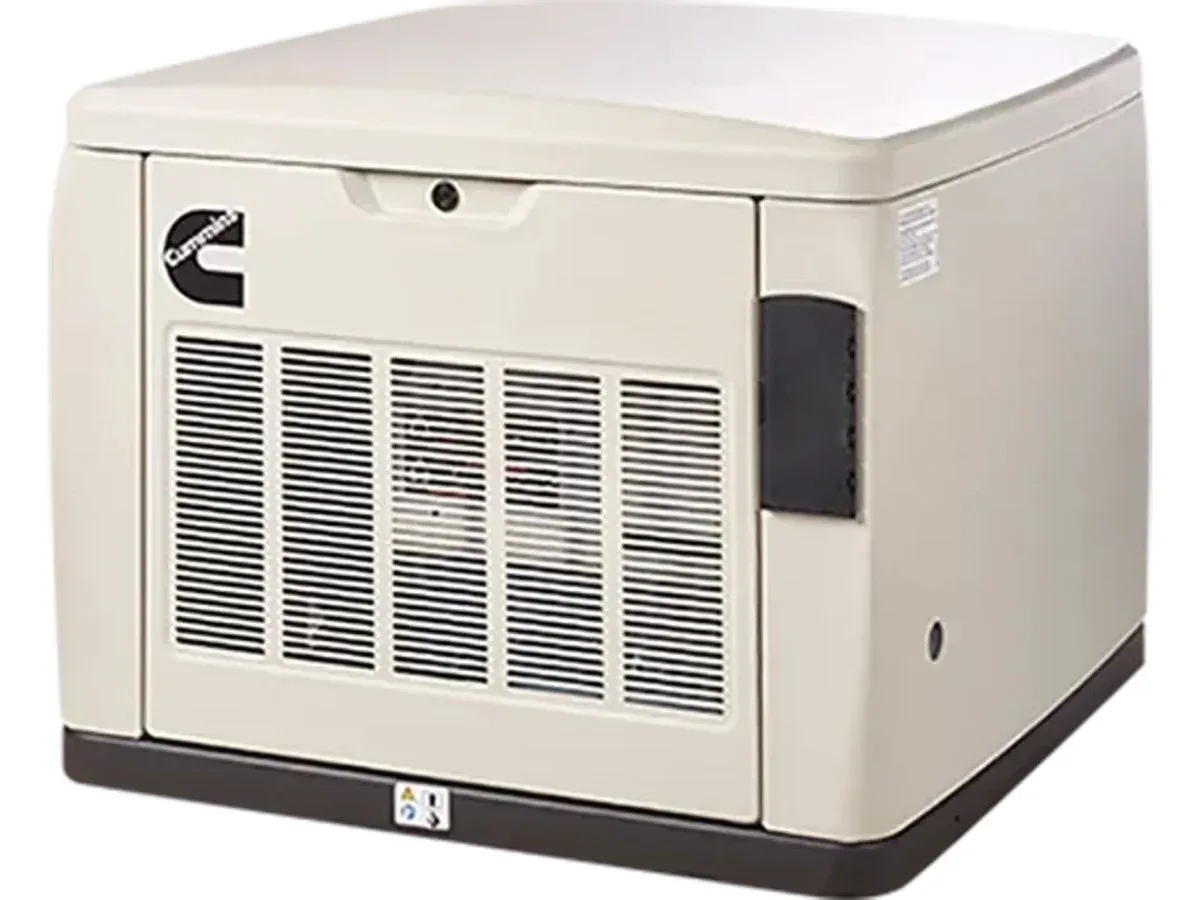
Air-cooled · Natural Gas / LP Vapor
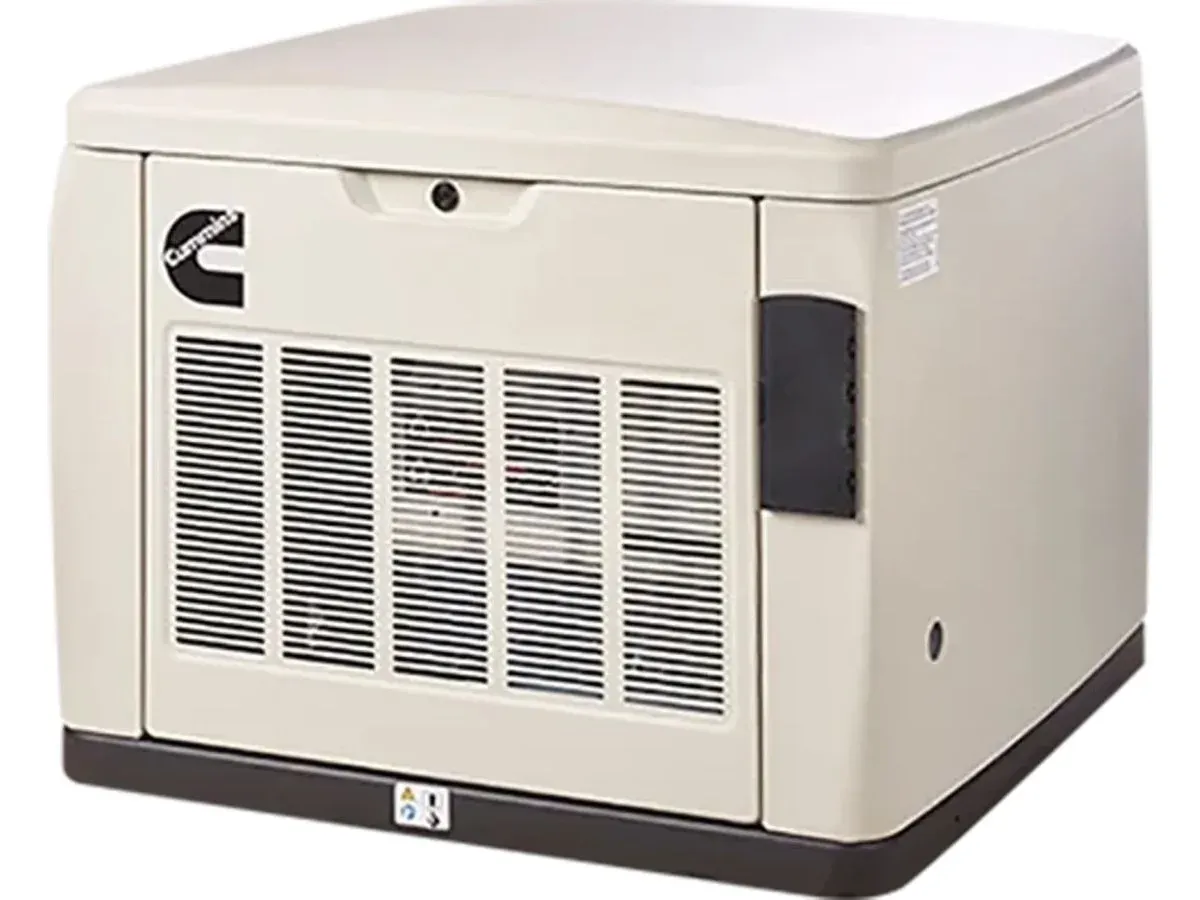
Air-cooled · Natural Gas / LP Vapor
The whole range, here
Every Cummins line we carry is available in Denton. The ones below that are permanently installed, we install — with our own licensed electricians under TECL #40628, across Denton County and the rest of the Metroplex. The rest ship direct to your address and need no electrician at all.
Equipment ships to all fifty states and completes in the cart. Installation is Dallas–Fort Worth only, because it is bounded by a Texas electrical license and quoted against your gas meter, your panel and Denton’s permit — how that works, or book the free survey.
Equipment is published on every model page — a 20kW Cummins RS20A is $5,925.25. Installed in Denton, a typical 20kW system runs $13,500 to $17,000 all in, including the pad, gas work, transfer switch, permit and commissioning. The spread depends on how far the generator sits from your gas meter and electrical panel, and whether the gas line needs upsizing.
Yes. Standby generator installations in Denton require permitting and inspection, and depending on the scope that can mean separate electrical and mechanical permits. We pull the permits and meet the inspector — it is part of the installation quote, not an extra you discover later. Requirements and fees differ between Denton County cities, which is why we confirm the specifics for your address rather than quoting a generic number.
Electric delivery in Denton is Denton Municipal Electric, a community-owned utility, for most of the city, with CoServ Electric and Oncor at some addresses, and natural gas is typically Atmos Energy. Both matter to a generator project: the electric utility governs how the transfer switch ties in at the meter, and the gas utility determines whether your meter can carry the additional demand or needs upsizing. We verify both against your actual address during the survey, because service boundaries in the Metroplex do not follow city limits cleanly.
The physical work on a typical residential job is one to three days. The calendar time is usually driven by permitting and inspection scheduling rather than by our crew. We give you a realistic window at the survey once we know which jurisdiction and what scope — we would rather quote a date we can hit.
Yes. UTS ElectricPros is the authorized Cummins dealer, and the installation in Denton is performed by Clements Electric, the assumed name (dba) under which UTS ElectricPros, LLC operates its licensed electrical crews, working from 2100 S Great Southwest Pkwy, Suite 505, Grand Prairie. That is one relationship, not a lead sold to whoever bids lowest — the same people who sold you the generator are accountable for how it goes in and how it runs afterward.